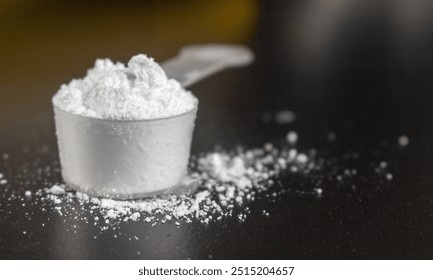
A single scoop of the average pre-workout supplement contains 250 to 350 mg of caffeine, with some products exceeding 400 mg per serving. That is more than the FDA's recommended daily limit for healthy adults in a single 8-gram scoop of fruit-flavored powder. The labels do not lie about the total number — they lie by omission, burying the exact dose inside "proprietary blends" and using serving-size tricks that make the product look safer than it is.
I learned this in 2022 when a friend in Seattle asked me to analyze the pre-workout he had been using for six months. He was a 32-year-old software engineer, 165 pounds, no health issues. He mixed one scoop every morning before his 6 AM CrossFit class. He felt jittery but attributed it to the intensity of the workout. Then he started having palpitations. Not during exercise — during meetings. Sitting at his desk at 10 AM, his heart would suddenly race to 110 bpm. His doctor ran an EKG. Normal. Blood work. Normal. They told him it was anxiety.
I asked him to bring me the tub. The label said "Caffeine Anhydrous — 250 mg" in the Supplement Facts panel. But below that, in the "Other Ingredients" section, it listed "Green Tea Extract (50% EGCG)" and "Guarana Seed Extract (22% caffeine)." I did the math. The green tea extract contributed an additional 15 mg. The guarana contributed another 35 mg. The total caffeine per scoop was 300 mg. And the serving size was "1 scoop (8g)." But the scoop included in the tub was heaped — when leveled, it held 10 grams. When heaped, it held 12 grams. My friend was not taking 300 mg. He was taking 450 mg. Every morning. On an empty stomach. Before high-intensity exercise.
The data on pre-workout caffeine is scattered because the supplement industry is not required to submit products for FDA approval before sale. They must follow Good Manufacturing Practices, but there is no pre-market testing for label accuracy. Independent labs that have tested pre-workout products find that 15–25% contain significantly more or less caffeine than stated. Some contain 50% more. Some contain synthetic stimulants not listed on the label — DMAA, DMHA, isopropylphenidate — that are structurally similar to amphetamines and banned by the FDA but still appear in products sold online.
Here is the caffeine landscape across popular pre-workout categories:
| Product Category | Typical Caffeine per Scoop | Hidden Sources | Total Estimated Caffeine |
|-----------------|---------------------------|---------------|------------------------|
| Standard pre-workout | 200–300 mg | Guarana, green tea, yerba mate | 250–380 mg |
| High-stim pre-workout | 300–400 mg | Multiple caffeine sources + synephrine | 350–500 mg |
| Stim-free pre-workout | 0 mg | None | 0 mg |
| Pre-workout RTD (ready-to-drink) | 200–300 mg per can | Rarely disclosed | 200–300 mg |
| Nootropic pre-workout | 100–200 mg | Often paired with L-theanine | 100–200 mg |
The high-stim category is particularly dangerous. These products market themselves to "advanced users" and "stim junkies," normalizing doses that would have been considered toxic a decade ago. I analyzed one product in 2023 that contained 420 mg of caffeine per scoop, plus 50 mg of synephrine (bitter orange extract), plus an undisclosed amount of yohimbine. The combined sympathetic activation from that stack — norepinephrine release, alpha-adrenergic agonism, beta-adrenergic stimulation — is pharmacologically similar to a low-dose amphetamine experience. People are buying this at GNC and drinking it before spin class.
What most people miss is the timing interaction. Pre-workout is designed to be consumed on an empty stomach for rapid absorption. Caffeine absorption from the GI tract is already 99% efficient, but an empty stomach accelerates the peak plasma concentration. A 300 mg dose on an empty stomach produces a sharper, higher peak than the same dose with food. The T-max — time to peak concentration — drops from 60–90 minutes to 30–45 minutes. The subjective feeling is intense. The cardiovascular load is equally intense. Blood pressure spikes, heart rate accelerates, and coronary blood flow can become turbulent. For someone with an undiagnosed cardiac condition, this is the moment of risk.
I have a personal rule: if a product uses a proprietary blend for caffeine, I do not use it. Proprietary blends are legal loopholes. The FDA requires that ingredients be listed in descending order by weight, but a proprietary blend can group multiple ingredients under a single total weight. "Energy Blend — 500 mg" might contain 400 mg of caffeine and 100 mg of taurine, or it might contain 100 mg of caffeine and 400 mg of filler. You cannot know. The company does not have to tell you. And if you are stacking this product with coffee, tea, or an afternoon energy drink, you have no way to calculate your total daily exposure.
The other deception is serving-size inflation. A product might say "200 mg per serving" in large print, but the serving size is half a scoop. The scoop included with the tub is a full scoop. Most users take a full scoop. The actual dose is 400 mg. This is not accidental. It is a deliberate marketing strategy to make the product look moderate while delivering an extreme dose. The FDA has issued warning letters for this practice, but the supplement industry moves faster than enforcement. By the time a letter is issued, the product has been reformulated under a new name.
So how much caffeine is in pre-workout? The label says 200–300 mg, but the real answer is 250–500 mg, depending on hidden sources, scoop size, and whether the user reads the fine print. For a 150-pound adult, 400 mg is at the edge of the FDA's daily limit. For a 120-pound adult, it is an overdose. For someone on oral contraceptives, it is a double overdose because clearance is halved. For someone taking fluvoxamine, it is a potential cardiac event.
If you use pre-workout, you need to treat it like a pharmaceutical, not a supplement. Weigh your scoop. Calculate total caffeine from all sources. Account for your body weight, your medications, and your CYP1A2 status. A caffeine calculator that includes pre-workout inputs can help you model your total daily load and flag dangerous combinations. The label will not protect you. The math will.
☕
Caffeine Intake Calculator
Log pre-workout, coffee, tea, and energy drinks in one daily total.
All data stays in your browser — we never see it.
⚡
Energy Drink Comparator
Compare cost-per-mg and stimulant stacks across pre-workout brands.
All data stays in your browser — we never see it.
### Frequently Asked Questions
#### How much caffeine is in pre-workout powder?
Standard pre-workout contains 200–300 mg per scoop, but hidden sources like guarana and green tea extract can push the total to 250–380 mg. High-stim products may contain 350–500 mg per serving.
#### Is 300mg of caffeine in pre-workout safe?
For a healthy 70-kg fast metabolizer, 300 mg is within the FDA's daily limit but should not be combined with other caffeine sources. For slow metabolizers, smaller individuals, pregnant women, or those on CYP1A2-inhibiting medications, 300 mg can cause significant cardiovascular and neurological effects.
#### Why do pre-workout labels hide caffeine amounts?
Supplement companies use "proprietary blends" to group ingredients under a single total weight, avoiding the requirement to disclose individual doses. This legal loophole allows them to conceal exact caffeine content and include undisclosed stimulants.
#### Can pre-workout cause heart palpitations?
Yes. High caffeine doses (300+ mg) on an empty stomach, combined with other stimulants like synephrine or yohimbine, can trigger tachycardia, elevated blood pressure, and arrhythmias. The risk is highest in slow metabolizers and people with undiagnosed cardiac conditions.
#### How can I accurately track pre-workout caffeine?
Weigh your scoop rather than using the included heaped scoop. Add up all caffeine sources from the label, including extracts. Use a caffeine calculator that includes pre-workout inputs and flags dangerous combinations with medications or other beverages.
---
A.M. — still angry about proprietary blends.
Caffeine is a tool, not a lifestyle. Measure it.