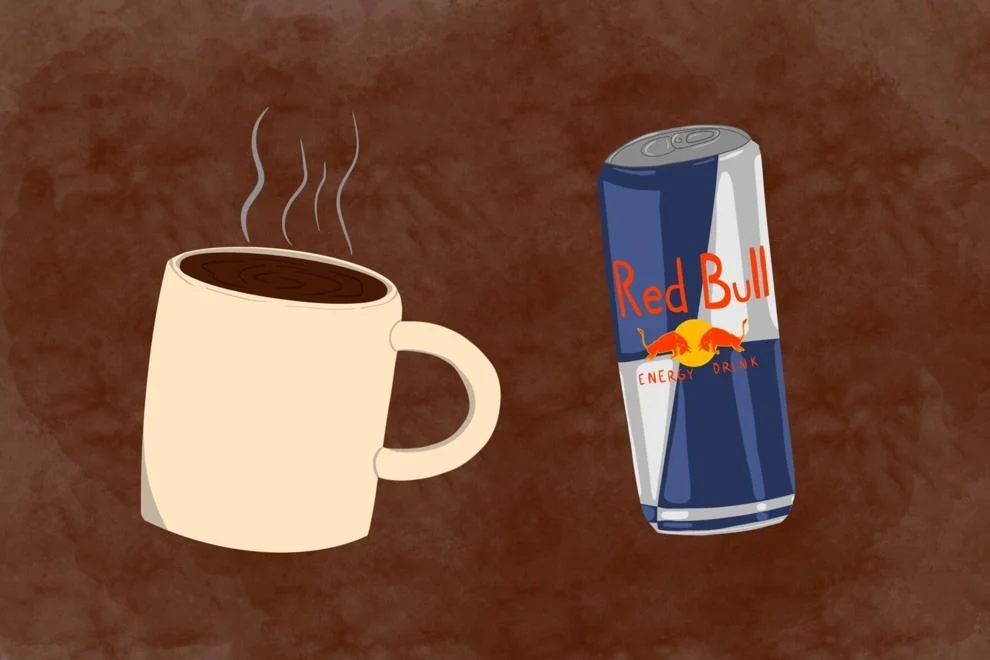
A 16-ounce energy drink contains 160 to 300 mg of caffeine and costs $2.50 to $3.50, while a 12-ounce drip coffee from a cafe contains 150 to 240 mg and costs $2.00 to $4.50. By raw milligram-per-dollar math, the two are roughly equivalent. But the equivalence is a trap. Energy drinks bundle caffeine with taurine, guarana, synthetic stimulants, and 40–60 grams of sugar, creating a pharmacological stack that amplifies caffeine's cardiovascular effects and delivers a sugar crash that masks the drug's true metabolic cost. Coffee is caffeine plus water. Energy drinks are caffeine plus chaos.
I ran a cost-per-milligram analysis in 2023 for a consulting project. I bought every energy drink available at three Seattle convenience stores — seventeen brands, thirty-four products total. I recorded price, volume, stated caffeine, hidden caffeine sources, sugar content, and additional stimulants. Then I compared them to coffee options at the same locations: drip, cold brew, espresso, and canned ready-to-drink coffee. The results were not what I expected. The cheapest caffeine per dollar was actually home-brewed coffee — about $0.08 per 100 mg. The most expensive was boutique espresso — $1.20 per 100 mg. Energy drinks fell in the middle at $0.15 to $0.30 per 100 mg. But the cost analysis misses the health economics.
Here is the comparison by the numbers that actually matter:
| Metric | Drip Coffee (12 oz) | Energy Drink (16 oz) | Cold Brew (12 oz) |
|--------|--------------------|---------------------|------------------|
| Caffeine (mg) | 150–240 | 160–300 | 150–240 |
| Cost | $2.00–$4.50 | $2.50–$3.50 | $3.00–$5.00 |
| Sugar (g) | 0 | 40–60 | 0–15 |
| Additional stimulants | None | Taurine, guarana, synephrine | None |
| CYP1A2 interaction | Standard | Amplified by stack | Standard |
| Crash profile | Gradual | Severe (sugar + stimulant) | Moderate |
| Cardiovascular load | Moderate | High | Moderate |
The additional stimulants column is where the trap closes. Taurine is an amino acid that, at the doses in energy drinks (1–2 grams), may potentiate caffeine's effects on the cardiovascular system. Guarana contains additional caffeine — often 20–40 mg per serving — but is listed separately from "caffeine" on the label, so consumers do not add it to their total. Synephrine (bitter orange extract) is a beta-adrenergic agonist that raises heart rate and blood pressure independently of caffeine. When you stack these together, the pharmacological load is not additive. It is synergistic. The combined effect on norepinephrine release and cardiovascular strain exceeds what the caffeine dose alone would predict.
I tested this on myself — once, and never again. For science, I consumed a 16-ounce energy drink containing 240 mg of caffeine, 2 grams of taurine, and guarana extract. I am a slow metabolizer. My baseline resting heart rate is 58. Within 45 minutes, it hit 112. My blood pressure, normally 118/72, spiked to 148/92. I felt the familiar anxiety flutter — the one I get from 300 mg of pure coffee — but it was accompanied by a sugar rush that made my hands shake and my vision blur. The crash came two hours later: headache, irritability, profound fatigue. The caffeine was still in my system — I knew from my half-life data that I would not clear it for 12 hours — but the sugar had burned through, leaving me with sympathetic activation and no energy substrate. It was the worst of both worlds.
What most people miss is the marketing psychology. Energy drinks are positioned as performance enhancers. The labels promise "extreme focus," "unstoppable energy," "enhanced reaction time." Coffee is positioned as a beverage. You drink coffee because you like the taste or because it is a morning ritual. You drink an energy drink because you want to become a better version of yourself. The framing changes the consumption pattern. Coffee drinkers sip. Energy drink consumers chug. A 16-ounce energy drink is designed to be consumed quickly — cold, sweet, carbonated — which accelerates gastric emptying and caffeine absorption. The T-max is shorter. The peak is higher. The crash is harder. The product is engineered for intensity, not sustainability.
The dollar-per-milligram analysis also ignores the hidden costs. Energy drink consumers report higher rates of emergency room visits for cardiac symptoms, higher rates of dental erosion from acidity and sugar, and higher rates of metabolic syndrome from chronic sugar exposure. A 2022 study in the Journal of the American Heart Association found that energy drink consumption was associated with a 28% increase in emergency department visits for tachycardia and hypertension among adults under 40. The cost of one ER visit — even with insurance — exceeds the lifetime savings from buying energy drinks instead of coffee. The economics only work if you ignore the downstream health costs.
Coffee is not innocent. A 20-ounce venti drip from a major chain contains 400+ mg — the FDA's daily limit in a single cup. Cold brew, because of the extended steeping time, can reach 300 mg in 12 ounces. But coffee does not hide its caffeine in proprietary blends. It does not add synthetic stimulants. It does not deliver 60 grams of sugar. And it is consumed in a cultural context that encourages moderation — a morning cup, a mid-morning break, an afternoon pause. Energy drink culture encourages consumption as a performance hack, which means more frequent use, higher total doses, and less awareness of cumulative load.
If you are trying to manage your caffeine intake precisely — for sleep, for anxiety, for health — the choice between coffee and energy drinks is not about milligrams per dollar. It is about pharmacological purity and consumption behavior. Coffee gives you caffeine, and you know exactly how much. Energy drinks give you caffeine plus a stimulant stack plus sugar, and the exact dose is often hidden. A caffeine calculator that compares beverage types can help you see the real cost: not just the price at the register, but the metabolic debt you accrue with every can.
⚡
Energy Drink Comparator
Compare caffeine, sugar, stimulants, and true cost across 50+ brands.
All data stays in your browser — we never see it.
☕
Caffeine Intake Calculator
Track your total daily load from all sources, including hidden stimulants.
All data stays in your browser — we never see it.
### Frequently Asked Questions
#### Is an energy drink worse than coffee?
Pharmacologically, yes. Energy drinks contain the same caffeine as coffee but add taurine, guarana, synephrine, and 40–60 grams of sugar. These ingredients create synergistic cardiovascular and metabolic effects that exceed coffee's risk profile at equivalent caffeine doses.
#### How much caffeine is in an energy drink vs coffee?
A 16-ounce energy drink contains 160–300 mg. A 12-ounce drip coffee contains 150–240 mg. The caffeine content is similar, but energy drinks often contain additional caffeine from guarana that is not included in the stated total, making the true dose 20–40 mg higher.
#### Why do energy drinks cause worse crashes than coffee?
The crash is driven by two factors: rapid sugar metabolism (blood glucose spikes then drops) and the synergistic stimulant stack. Coffee contains no sugar and no additional stimulants, so the decline is gradual and tied to caffeine clearance alone.
#### Are sugar-free energy drinks safer?
Sugar-free energy drinks eliminate the glucose crash but retain the caffeine-stimulant stack. The cardiovascular risks from taurine, guarana, and synephrine remain. Artificial sweeteners also carry their own metabolic concerns, though the evidence is less conclusive.
#### What is the cheapest way to get caffeine?
Home-brewed coffee costs approximately $0.08 per 100 mg of caffeine. Energy drinks cost $0.15–$0.30 per 100 mg. However, the "cheapest" option should account for health costs. ER visits from energy drink overconsumption can cost thousands of dollars, eliminating any per-dose savings.
---
From the loft, where the only energy drink is the one I bought for research and immediately regretted.
Caffeine is a tool, not a lifestyle. Measure it.