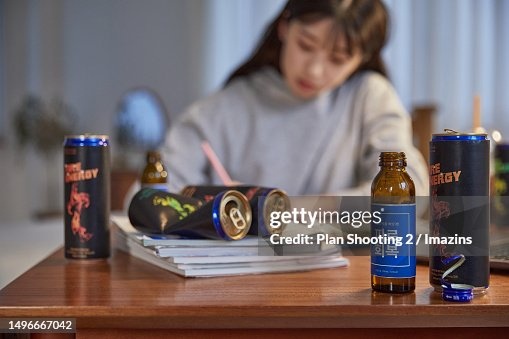
A 16-ounce energy drink contains 160 to 300 mg of caffeine, 40 to 60 grams of sugar, and a cocktail of taurine, guarana, and synthetic stimulants — and it is marketed directly to children. The American Academy of Pediatrics recommends 100 mg as the daily caffeine limit for adolescents. One can exceeds that by 160 to 300%. The marketing is not subtle. It is neon colors, extreme sports sponsorships, gaming influencer partnerships, and fruit flavors that taste like candy. The product is a pharmacological sledgehammer dressed as a soft drink, and the target is a 14-year-old whose prefrontal cortex will not finish developing for another decade.
I stood in a 7-Eleven in Seattle last month and watched a boy who could not have been older than fifteen buy a 24-ounce energy drink at 7:30 AM. He was wearing a school backpack. He paid with cash. The cashier did not ask for ID. The can contained 300 mg of caffeine — three times the adolescent daily limit — plus 54 grams of sugar, guarana extract, and "natural flavors" that were almost certainly synthetic stimulants. He walked out sipping it like it was juice. By second period, his heart rate would be above 100 bpm. By lunch, he would be crashing. By soccer practice, he might need another one. The cycle is not accidental. It is engineered.
The marketing playbook is well-documented and morally bankrupt. Energy drink companies sponsor extreme sports events — motocross, skateboarding, BMX — that appeal to adolescent risk-seeking behavior. They partner with gaming streamers on Twitch and YouTube who drink the product on camera while playing Fortnite or Call of Duty, normalizing consumption as part of performance culture. They use flavors like "Rainbow Sherbet," "Sour Apple," and "Tropical Punch" that are indistinguishable from soda. The packaging is designed to look like video game power-ups. The message is clear: this is not a drug. This is a lifestyle accessory. And the lifestyle is performance, intensity, and belonging.
The physiological reality is the opposite. Here is what 300 mg of caffeine does to a 130-pound teenager:
| Parameter | Baseline | 1 Hour Post-300mg | 3 Hours Post | 6 Hours Post |
|-----------|---------|------------------|--------------|--------------|
| Heart rate | 70 bpm | 95–110 bpm | 90–105 bpm | 85–100 bpm |
| Blood pressure | 110/70 | 130/85 | 125/82 | 120/78 |
| Blood glucose | 90 mg/dL | 140–160 mg/dL | 100–110 mg/dL | 80–70 mg/dL (crash) |
| Subjective state | Normal | Jittery, hyperactive | Anxious, irritable | Fatigued, headache-prone |
The blood glucose row is the sugar crash. The 54 grams of sugar in that 24-ounce can produces a rapid insulin spike, followed by a hypoglycemic dip 4 to 6 hours later. The teenager feels shaky, hungry, and irritable — and reaches for another energy drink to "fix" the crash. The caffeine is still in his system — a slow metabolizer might clear only 50% in 6 hours — but the sugar is gone. The second can stacks caffeine on top of caffeine, pushing the total to 600 mg, while the sugar repeats the spike-crash cycle. By the end of the school day, the teenager has consumed 600 mg of caffeine, 108 grams of sugar, and a pharmacological load that would send most adults to the ER.
What most people miss is the developmental vulnerability. The adolescent brain is undergoing synaptic pruning, myelination, and prefrontal cortex maturation — processes that will not complete until roughly age 25. Caffeine blocks adenosine receptors, which modulate dopamine and norepinephrine signaling. In a developing brain, chronic caffeine exposure can alter receptor density and neurotransmitter sensitivity in ways that do not occur in adults. The animal data is consistent: juvenile rats exposed to chronic caffeine show altered sleep architecture, increased anxiety-like behaviors, and reduced hippocampal neurogenesis. We do not have equivalent human data because no one wants to fund research that might hurt a billion-dollar industry. So we experiment on teenagers in convenience stores and call it marketing.
The regulatory gap is staggering. The FDA regulates caffeine in soft drinks — capped at 71 mg per 12 ounces — but does not apply the same cap to energy drinks, which are classified as "dietary supplements" or "conventional foods" depending on the manufacturer's lobbying. This means a 16-ounce energy drink can contain 300 mg while a 12-ounce soda cannot contain more than 71 mg. The classification is arbitrary. The health consequences are not. Several countries — including the UK, Lithuania, and Latvia — have banned the sale of energy drinks to minors. The United States has not. The FDA has issued warning letters. The industry has reformulated, rebranded, and continued.
I have a personal stake in this. Sam's niece, the fifteen-year-old in Tacoma, ended up in the ER after two energy drinks before a soccer tournament. Heart rate 140. Blood pressure 160/95. She was not overdosing in the clinical sense — 380 mg is below the acute toxicity threshold for her weight. But her adolescent metabolism, her empty stomach, and her dehydration created a perfect storm. She was fine after IV fluids. But the scare was real, and the cause was entirely preventable. The can did not warn her. The label said "extreme energy" like it was a feature, not a threat.
The solution is not complicated. Ban energy drink sales to minors. Require caffeine content from all sources — including guarana — to be aggregated on the label. Prohibit marketing to children under 18. Treat energy drinks like tobacco or alcohol: a restricted product for adults who can make informed decisions about their own pharmacology. A teenager buying a 300 mg caffeine drink at 7:30 AM is not making an informed choice. He is being marketed to by a billion-dollar industry that knows exactly what it is doing.
If you are a parent, a teacher, or a teenager trying to understand what these products actually contain, an energy drink comparator can break down the caffeine, sugar, stimulant stack, and true cost per milligram across popular brands. The data is public. The labels are required to list ingredients. The problem is that no one reads them, and the marketing is designed to make sure no one wants to. The can says "extreme." The label says 300 mg. The body says: please stop.
⚡
Energy Drink Comparator
Compare caffeine, sugar, and stimulants across brands marketed to teens.
All data stays in your browser — we never see it.
☕
Caffeine Intake Calculator
Track age-adjusted caffeine limits and spot hidden doses in energy drinks.
All data stays in your browser — we never see it.
### Frequently Asked Questions
#### Why do energy drinks target teenagers?
Energy drink marketing leverages adolescent psychology — risk-seeking, identity formation, performance anxiety — through extreme sports sponsorships, gaming influencer partnerships, and candy-like flavors. The goal is to normalize high-dose caffeine consumption as a lifestyle accessory before teenagers develop critical evaluation skills.
#### How much caffeine is too much for a teenager?
The American Academy of Pediatrics recommends no more than 100 mg per day for adolescents 12–18. Most energy drinks contain 160–300 mg per can, exceeding this limit by 160–300% in a single serving. Combined with slower adolescent metabolism, this poses significant cardiovascular and neurological risks.
#### Are energy drinks banned for minors anywhere?
Yes. The UK, Lithuania, Latvia, and several other countries have banned or restricted energy drink sales to minors. The United States has not implemented such restrictions, though the FDA has issued warning letters to manufacturers for misleading marketing and undisclosed ingredients.
#### Can energy drinks cause heart problems in teenagers?
Yes. High caffeine doses (300+ mg) combined with sugar crashes and stimulant stacks can trigger tachycardia, hypertension, and arrhythmias in adolescents. Several case reports document emergency room visits for cardiac symptoms in teenagers after energy drink consumption, even at doses below acute toxicity thresholds.
#### What should parents know about energy drinks?
Read labels carefully. A single can may contain 2–3 times the recommended daily caffeine limit for teenagers. Look for hidden caffeine sources like guarana. Treat energy drinks like alcohol or tobacco — not appropriate for minors. Use a caffeine calculator to model what a single can does to an adolescent's daily budget.
---
From the loft, where I am still angry about what I saw in that 7-Eleven.
Caffeine is a tool, not a lifestyle. Measure it.