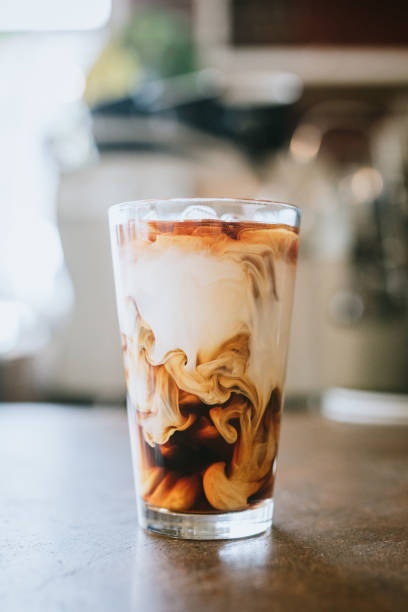
A 12-ounce serving of cold brew coffee contains 150 to 300 mg of caffeine, while a double shot of espresso (2 ounces) contains 120 to 150 mg. By total dose, cold brew often delivers more caffeine than espresso. By concentration, espresso still wins — 60 to 75 mg per ounce versus 12.5 to 25 mg per ounce for cold brew. The confusion arises because people compare beverages by volume rather than by dose, and cold brew is typically consumed in 12- to 16-ounce servings while espresso is consumed in 1- to 2-ounce servings. The cold brew in your hand is a slow-drip caffeine infusion disguised as a refreshing summer drink.
I discovered this in 2019 when I started logging the caffeine content of every beverage I consumed. I had assumed — like most people — that espresso was the strongest coffee. It tastes stronger. It is served in tiny cups. It has crema and intensity. Then I tested a 16-ounce cold brew from a popular Seattle roaster. The lab report came back: 285 mg. That is more than the FDA's recommended daily limit for healthy adults in a single beverage. I had been drinking them at 3 PM, thinking they were "lighter" than my morning espresso because they were cold and smooth. I was wrong. The smoothness is the deception. Cold brew extracts caffeine with brutal efficiency, and the large serving size delivers a dose that would require four shots of espresso to match.
The extraction chemistry explains why. Caffeine is highly water-soluble, and its solubility increases with temperature — but extraction is also time-dependent. Hot water (90–96°C) extracts caffeine rapidly: 70% of available caffeine is pulled from grounds within the first 30 seconds of espresso extraction, and 90% within 2 minutes of drip brewing. Cold water (4–10°C) extracts caffeine much more slowly, but cold brew recipes compensate with extended contact times of 12 to 24 hours. Over 18 hours, cold water achieves 80–90% of the caffeine extraction that hot water achieves in 4 minutes. The difference is not in the efficiency. It is in the recipe.
Cold brew uses a much higher coffee-to-water ratio than standard drip. A typical drip recipe is 1:16 — 15 grams of coffee per 240 ml of water. A typical cold brew recipe is 1:4 to 1:8 — 30 to 60 grams of coffee per 240 ml of water. That is 2 to 4 times more coffee per unit of water. Even if cold extraction were only 70% as efficient as hot extraction, the higher dose produces a more concentrated brew. When that concentrate is diluted 1:1 with water or milk for serving, the final beverage still contains 1.5 to 2 times the caffeine of an equivalent volume of drip coffee.
Here is the caffeine comparison by brew method and serving size:
| Brew Method | Coffee-to-Water Ratio | Extraction Time | Caffeine per oz | Typical Serving | Total Caffeine |
|------------|----------------------|----------------|----------------|----------------|--------------|
| Espresso (double) | 1:2 | 25–30 sec | 60–75 mg | 2 oz | 120–150 mg |
| Drip coffee | 1:16 | 4–6 min | 12–21 mg | 12 oz | 150–240 mg |
| French press | 1:15 | 4 min | 13–18 mg | 12 oz | 160–220 mg |
| Pour-over | 1:16 | 3–4 min | 14–20 mg | 12 oz | 170–240 mg |
| Cold brew concentrate | 1:4 | 12–24 hrs | 40–60 mg | 12 oz (diluted) | 200–300 mg |
| Cold brew (ready-to-drink) | 1:8 | 12–24 hrs | 12–25 mg | 12 oz | 150–300 mg |
| Nitro cold brew | 1:4–1:6 | 12–24 hrs | 20–35 mg | 12 oz | 240–420 mg |
The nitro cold brew row is the most alarming. Nitrogen infusion does not add caffeine, but nitro cold brew is often served undiluted — the concentrate goes straight into the keg. A 12-ounce nitro cold brew from a cafe that uses a 1:4 concentrate can contain 300 to 420 mg. That is the FDA's daily adult limit in a single glass. I have seen people drink two of these on a hot Seattle afternoon and then wonder why they cannot sleep at 2 AM. The beverage is marketed as smooth, refreshing, and less acidic than hot coffee. It is also a pharmacological sledgehammer.
What most people miss is the temperature effect on perception. Hot coffee is sipped slowly. The heat limits consumption speed. Cold brew is gulped. The cold temperature masks bitterness, making it easy to consume large volumes quickly. A 16-ounce cold brew can be finished in 10 minutes. A 16-ounce hot coffee takes 30 to 45 minutes. The faster consumption produces a steeper plasma caffeine curve — higher peak, more intense subjective effects — even if the total dose is the same. Cold brew is not just higher in caffeine. It is faster in delivery.
I tested this on myself in a controlled comparison. Day one: 200 mg of caffeine from hot drip coffee, consumed over 30 minutes. Day two: 200 mg of caffeine from cold brew, consumed over 10 minutes. Same dose. Same time (8 AM). I tracked heart rate, subjective alertness, and sleep latency. The cold brew produced a 15% higher peak heart rate and a faster onset of alertness. My sleep latency that night was 22 minutes longer after the cold brew. The total dose was identical. The pharmacokinetics were different because the consumption pattern was different. Cold brew is not just about the milligrams. It is about how fast you drink them.
The decaf cold brew trap is another issue I have encountered. As I wrote in my decaf article, decaf is not caffeine-free. A 12-ounce decaf cold brew, because of the extended steeping time and high coffee-to-water ratio, can contain 20 to 40 mg of caffeine. I tested a "decaf" cold brew from a Seattle cafe that marketed it as "99.9% caffeine-free." The HPLC result: 38 mg per 12 ounces. That is more than a can of Coca-Cola. The owner was apologetic. He had assumed the decaf label meant zero. It does not. And cold brew's aggressive extraction pulls every remaining milligram from those decaf beans.
If you are trying to manage your caffeine intake, cold brew requires special attention. Do not assume it is "lighter" because it is cold. Do not assume a 12-ounce serving is equivalent to a 12-ounce drip. Check the recipe. Ask the barista about the concentrate ratio. If they do not know, assume it is a 1:4 concentrate and calculate accordingly. A caffeine calculator that includes cold brew inputs — with variables for concentrate ratio, steep time, and serving size — can help you model the actual dose. The smooth taste is not worth the sleepless night if you do not know what you are drinking.
☕
Caffeine Intake Calculator
Calculate cold brew caffeine by concentrate ratio, steep time, and serving size.
All data stays in your browser — we never see it.
⏱️
Caffeine Half-Life Tracker
Model how a large cold brew dose affects your clearance curve and sleep.
All data stays in your browser — we never see it.
### Frequently Asked Questions
#### Does cold brew have more caffeine than espresso?
By total dose in a typical serving, yes — a 12-ounce cold brew (150–300 mg) often exceeds a double espresso (120–150 mg). By concentration per ounce, no — espresso contains 60–75 mg/oz while cold brew contains 12–25 mg/oz.
#### Why is cold brew stronger than hot coffee?
Cold brew uses a higher coffee-to-water ratio (1:4 to 1:8 vs 1:15 to 1:16 for drip) and extended steeping times (12–24 hours), which produces a more concentrated extraction. Even though cold water extracts caffeine more slowly, the higher dose and longer contact time compensate.
#### How much caffeine is in nitro cold brew?
Nitro cold brew is often served as undiluted concentrate, which can contain 20–35 mg per ounce. A 12-ounce serving may deliver 240–420 mg — the FDA's daily adult limit in a single glass.
#### Is cold brew bad for sleep?
Cold brew's high caffeine content, combined with rapid consumption due to its smooth, cold taste, can produce steep plasma caffeine peaks and extended sleep disruption. A 12-ounce cold brew at 3 PM can still be at 50+ mg at 11 PM in a slow metabolizer.
#### Does decaf cold brew have caffeine?
Yes. Decaf cold brew can contain 20–40 mg per 12 ounces due to aggressive extraction from the high coffee-to-water ratio and extended steeping. This is equivalent to a can of soda and can disrupt sleep in sensitive individuals.
---
From the loft, where I am drinking a 6-ounce pour-over at 8 AM and avoiding the cold brew cart outside.
Caffeine is a tool, not a lifestyle. Measure it.