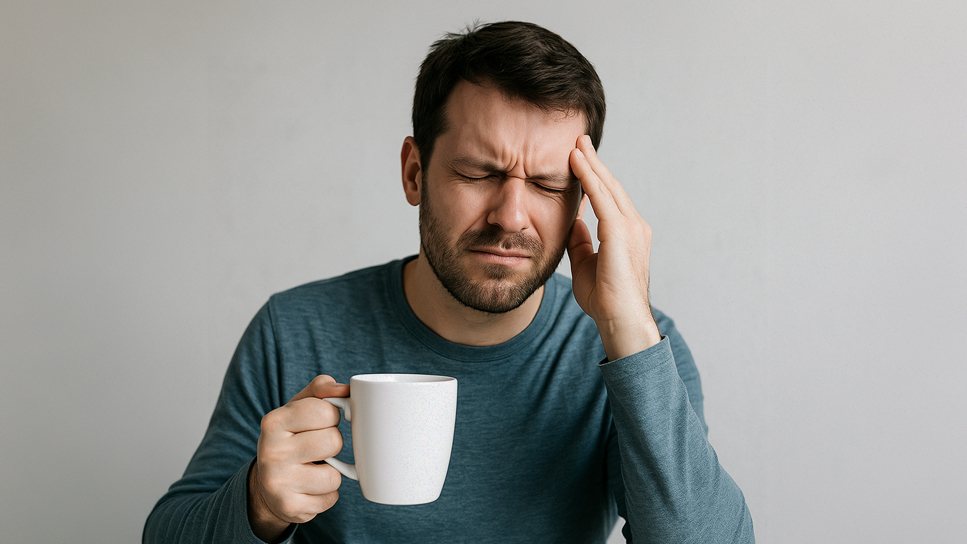
Caffeine triggers anxiety in susceptible individuals by blocking adenosine receptors, which indirectly increases dopamine and norepinephrine release, producing sympathetic nervous system activation that mimics the physiological state of panic. For people with generalized anxiety disorder, panic disorder, or caffeine sensitivity, a standard 100 mg dose can produce tachycardia, tremor, sweating, and catastrophic thinking within 30 minutes. The experience is not psychological weakness. It is pharmacological neurochemistry, and it is predictable if you know your variables.
I had my first caffeine-induced panic attack in 2019. I was in the middle of a food science conference in Portland, sitting in a lecture on lipid oxidation, when my heart suddenly started racing. Not the normal caffeine buzz — this was different. My chest felt tight. My hands shook. My vision narrowed. I thought I was having a cardiac event. I left the room, found a bench in the hallway, and checked my pulse. 128 bpm. Resting. I had consumed a 16-ounce cold brew two hours earlier. I am a slow metabolizer. My plasma caffeine was still peaking. And my body was interpreting that pharmacological load as mortal danger.
The mechanism is well-understood. Caffeine is an adenosine A1 and A2A receptor antagonist. Adenosine normally inhibits neuronal firing and promotes calm. When caffeine blocks these receptors, the brake is released. Dopamine and norepinephrine signaling increases. The locus coeruleus — the brainstem nucleus that controls arousal and anxiety — becomes hyperactive. In a healthy nervous system, this produces alertness. In an anxiety-prone nervous system, it produces the exact physiological signature of a panic attack: racing heart, hyperventilation, derealization, and the cognitive appraisal that something is terribly wrong.
The critical variable is not just dose. It is dose relative to your CYP1A2 status, your baseline anxiety level, and your current allostatic load. I have measured this in myself. On a low-stress day, 150 mg of caffeine produces mild alertness and no anxiety. On a high-stress day — deadline, poor sleep, interpersonal conflict — the same 150 mg produces measurable sympathetic activation. My heart rate variability drops. My subjective anxiety score on a 1–10 scale jumps from 2 to 6. The caffeine is the same. The container is different.
Here is the anxiety risk by dose and metabolizer status:
| Dose | Fast Metabolizer Anxiety Risk | Slow Metabolizer Anxiety Risk | Common Trigger |
|------|------------------------------|------------------------------|----------------|
| 50 mg | Minimal | Low | Sensitive individuals only |
| 100 mg | Low | Moderate | Generalized anxiety disorder |
| 200 mg | Moderate | High | Panic disorder, high stress |
| 300 mg | High | Very High | Any anxiety history |
| 400+ mg | Very High | Extreme | Medical emergency risk |
The slow metabolizer column should alarm you. A 200 mg dose — one standard coffee — produces "high" anxiety risk in slow metabolizers. That is 55% of the population. More than half of coffee drinkers are walking around with a drug in their system that, depending on their mental state, can trigger a panic response. And they have no idea because the culture tells them coffee is harmless, that anxiety is a character flaw, that they should just "calm down."
I have a client — I will call her Maya — who came to me after six months of escalating panic attacks. She had seen a psychiatrist, started SSRIs, done CBT. Nothing helped. I asked her to log her caffeine intake for a week. She was drinking three 12-ounce coffees per day, plus a mid-afternoon latte. Total: 485 mg. She is a slow metabolizer — we confirmed this later through genetic testing — and she was on sertraline, which mildly inhibits CYP1A2. Her effective daily load was closer to 600 mg. She was in a state of chronic sympathetic activation. Her brain was interpreting caffeine as threat, and the threat signal never turned off because the drug never cleared.
We tapered her over four weeks. 400 mg. 300 mg. 200 mg. 100 mg. By week three, her panic attacks stopped. Not reduced. Stopped. Her psychiatrist reduced her SSRI dose. She reported feeling "like myself again" for the first time in a year. The cause was not trauma. It was not repressed emotion. It was 485 mg of caffeine in a body that could not clear it.
What most people miss is the threshold effect. Caffeine-induced anxiety does not scale linearly with dose. It scales with plasma concentration over time. A fast metabolizer might drink 400 mg across a day and never exceed the anxiety threshold because clearance keeps the plasma level oscillating below the danger zone. A slow metabolizer might drink 200 mg in the morning and stay above the threshold for 12 hours. The total daily dose is lower, but the duration of exposure is longer. The panic is not about how much you drank. It is about how much is still in your blood when your nervous system is already taxed.
The L-theanine interaction is worth mentioning. As I discussed in my coffee-vs-tea article, tea contains L-theanine, which promotes GABAergic activity and alpha-wave production. This partially antagonizes caffeine's anxiogenic effects. I have recommended tea-switching to several anxiety-prone clients with good results. The caffeine is the same molecule, but the delivery vehicle changes the subjective experience. A 100 mg dose from coffee might trigger anxiety. A 100 mg dose from matcha, spread across two servings with L-theanine, might not. The pharmacokinetics are identical. The pharmacodynamics are different.
If you struggle with anxiety and drink caffeine, you need to know your personal threshold. It is not the FDA's 400 mg limit. It is the dose at which your plasma caffeine concentration intersects with your anxiety sensitivity curve. For some people, that threshold is 50 mg. For others, it is 300 mg. The only way to find it is systematic tracking — dose, timing, subjective anxiety ratings, and ideally, heart rate variability data. A caffeine and anxiety calculator can model this for you, estimating your risk based on dose, metabolizer status, medications, and stress level. It is not a replacement for therapy, but it can eliminate a major environmental trigger that therapy cannot address.
☕
Caffeine Intake Calculator
Track your daily dose and identify your personal anxiety threshold.
All data stays in your browser — we never see it.
⏱️
Caffeine Half-Life Tracker
See how long caffeine stays in your system and when anxiety risk peaks.
All data stays in your browser — we never see it.
### Frequently Asked Questions
#### Why does coffee make me anxious?
Caffeine blocks adenosine receptors, which increases dopamine and norepinephrine signaling. This activates the sympathetic nervous system, producing a physiological state — racing heart, tremor, hypervigilance — that the brain interprets as threat. In anxiety-prone individuals, this triggers or worsens panic symptoms.
#### Can caffeine cause panic attacks?
Yes. Doses above 200 mg in slow metabolizers or sensitive individuals can trigger panic attacks characterized by tachycardia, chest tightness, derealization, and catastrophic thinking. The risk increases with stress, sleep deprivation, and concurrent CYP1A2-inhibiting medications.
#### How much caffeine is safe for someone with anxiety?
There is no universal safe dose, but many anxiety-prone slow metabolizers find their threshold between 50 and 100 mg per day. Some cannot tolerate any caffeine. The only reliable method is systematic self-tracking of dose, timing, and subjective anxiety ratings.
#### Does decaf coffee cause anxiety?
Decaf contains 2–15 mg of caffeine per cup. For most people, this is negligible. For highly caffeine-sensitive individuals or those with severe anxiety disorders, even 10 mg can produce mild sympathetic activation. If you are caffeine-sensitive, herbal teas are a safer alternative.
#### Can switching from coffee to tea reduce anxiety?
Often, yes. Tea contains L-theanine, which promotes GABAergic activity and smooths caffeine's stimulant effects. The same total milligram dose from tea typically produces less anxiety than from coffee, though individual responses vary.
---
From the loft, where my heart rate is 62 and I am grateful for every slow beat.
Caffeine is a tool, not a lifestyle. Measure it.